


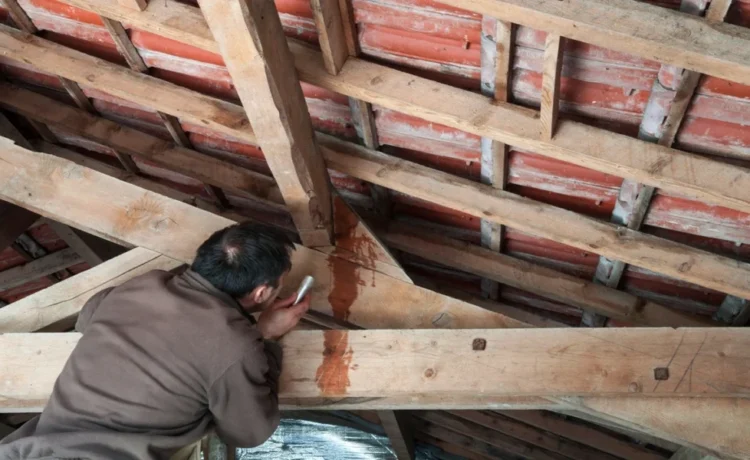
Most winter roof leaks are not roofing failures. They are heat failures that happen to show up on the roof. That distinction changes who you call, what you pay for, and whether the repair survives next February. Before you hire a Richfield roofing company to patch a ceiling stain, it helps to know what actually caused it.
The Three Ingredients Behind Most Winter Leaks
Ice dams need three things: snow, heat to melt it, and cold to refreeze it. According to Paul Fisette of UMass Amherst’s Building and Construction Technology program, a dam can form under as little as one or two inches of snow when a roof is poorly insulated and air sealed, followed by several sub-freezing days.
The mechanism is simple. Heat escaping from the living space warms the upper roof, and snow melts there. The water runs downhill beneath the snow blanket until it reaches the overhang, which has no heat under it. There it refreezes into a ridge of ice. The next round of meltwater pools behind that ridge and works its way under the shingles.
Where the Heat Is Really Escaping
Homeowners usually blame the shingles first. The leak path tells a different story.
Penetrations and Hatches
Wire and plumbing holes, recessed lights, bathroom fan housings, chimneys, and attic hatches all let warm indoor air drift upward. Each gap is small. Together they can heat a roof deck enough to melt snow.
The Wall Top Plate
On many homes the rafters sit directly on the exterior walls, leaving a shallow pocket for insulation right where the eaves begin. Low insulation value plus careless air sealing at that spot is a classic setup for ice dams.
Skylights
Skylights are typically low-insulation assemblies. They melt snow around them, and that water runs down to a cold section of roof below. If your leak sits under a skylight, start your investigation there.
What a Roofer Can and Cannot Fix
A roofer can replace damaged shingles, flashing, and underlayment. A roofer cannot change how much heat your house loses unless the scope includes ventilation or insulation work. Honest contractors say so up front.
Self-adhering waterproof membrane installed at the eaves, valleys, chimneys, and skylights is a reasonable second line of defense, especially where a true cure is impractical. It treats the symptom, though. It does not remove the cause.
Metal roofing deserves the same honesty. Steep metal roofs shed snow well, but they are not a substitute for proper insulation.
Fixes People Pay For and Regret
Some popular remedies deserve skepticism.
- Heat cable: Fisette writes that he has never seen a zig-zag cable solve an ice dam problem. It spends electricity fighting a heat-loss problem, can embrittle shingles, and often creates a new dam just above the cable.
- Metal ice belts: They sometimes work, but a secondary dam frequently forms above the strip.
- Chipping ice by hand: Hammers and shovels tend to damage the roof and put the person on the ladder at risk. A roof rake used carefully from the ground is the safer way to remove snow.
A Realistic Fix Order
The sequence matters because each step supports the next.
- Seal air leaks with spray foam, caulk, or weatherstripping at every ceiling penetration.
- Add insulation. For houses in the northern United States, Fisette recommends at least R-38, roughly 12 inches of fiberglass or cellulose, kept continuous and evenly deep.
- Ventilate soffit to ridge. Continuous soffit and ridge vents move cold air under the sheathing, and a 2-inch air space above the insulation keeps that airflow open. Baffles protect the insulation from wind coming through the soffits.
- Protect the vulnerable edges with waterproof underlayment.
- Replace the roof covering only when it is actually damaged or worn out.
Skipping straight to step five is the most expensive mistake on this list.
Questions to Ask Before You Sign
Will you inspect the attic, or only the roof surface? A contractor who never looks inside is guessing at the cause.
What credentials do you hold? Look for industry membership and manufacturer certifications. Blue Sky Roofing, for example, lists National Roofing Contractors Association membership and certified installer status with GAF and CertainTeed, the kind of credentials worth confirming with any contractor.
How will ventilation be handled? Some shingle manufacturers reduce warranty coverage for poorly ventilated attics, so this affects more than ice dams.
Who manages the job day to day? A named project manager means someone answers when something goes wrong.
An Honest Caveat
Fisette’s article dates to 2011 and is archived by UMass, so product names and prices have changed, though the building science has not. Every house loses heat differently, and an infrared home energy assessment is the most reliable way to find your specific leaks. Treat any roofing quote that ignores the attic as incomplete.

Is Your Attic Quietly Aging Your Roof?


Most people judge a roof by what they can see from the yard, a few missing shingles or a stain...