




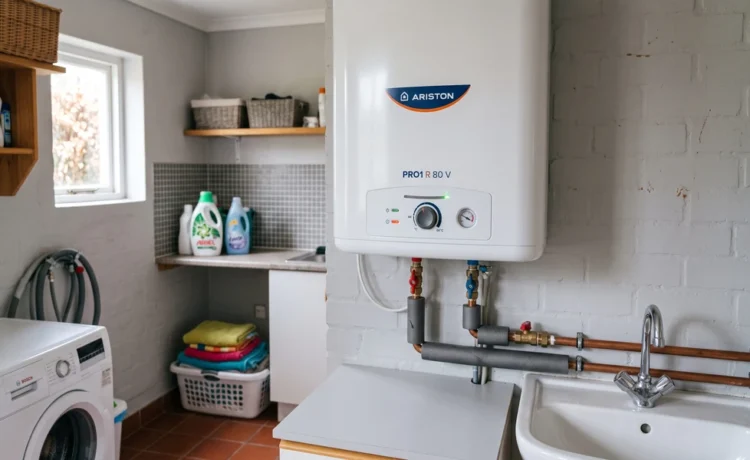
Nobody shops for a water heater on a good day. It usually happens when the shower turns cold, a puddle shows up near the tank, or a strange rumble starts coming from the basement. Then you have a day or two to make a decision that will affect your energy bills for the next decade or more. Homeowners in Harford County who start researching Bel Air Stewards water heaters often have the same handful of questions. This guide walks through them in order so the decision feels less like a scramble.
Question 1: Is My Water Heater Actually Failing?
Not every cold shower means a replacement. Before you commit, look for these signs:
- Age. Storage tank models typically last 10 to 15 years, according to the U.S. Department of Energy. If yours is in that range, start planning now.
- Water around the base. A leak from the tank itself is rarely repairable.
- Rusty or discolored hot water. This can point to internal corrosion.
- Popping, rumbling, or banging. Sediment buildup inside the tank is a common cause.
- Not enough hot water. A failing heating element or a heavily scaled tank can shorten supply.
Some problems, like a bad thermostat or a worn element, are inexpensive to fix. A good plumber will lay out repair and replacement options honestly rather than push one answer. If the unit is old and leaking, replacement is usually the smarter spend.
Question 2: Which Type Fits My Home?
This is the biggest choice, and the Department of Energy’s water heater comparison lays out the main options. Here is a plain summary:
| Type | Typical lifespan | Main advantage | Main drawback |
|---|---|---|---|
| Storage tank | 10 to 15 years | Lower purchase cost, handles several uses at once | Standby heat loss |
| Tankless | About 20 years | 8 to 34 percent more efficient than storage models | Higher upfront cost, limited flow |
| Heat pump | 10 to 15 years | Two to three times more efficient than standard electric | Needs space and the right temperature range |
| Solar | About 20 years | Free fuel, about 50 percent more efficient | Higher upfront cost, may need backup |
The agency notes that tankless units deliver roughly 2 to 5 gallons per minute, so a busy household may need more than one. Heat pump models work only in spaces that stay between about 40 and 90 degrees Fahrenheit year round and need at least 1,000 cubic feet of air around them.
Question 3: What Size Do I Need?
An undersized heater leaves the last person in line with a cold rinse. An oversized one wastes energy keeping extra water hot. A few rules of thumb help:
- Count how many people live in the home and how many bathrooms you use at the same time.
- Think about peak moments, such as weekday mornings, when showers and the dishwasher overlap.
- For tankless models, think in terms of flow rate rather than tank size.
- Ask the installer to size the unit for your actual habits, not a generic chart.
Question 4: What Will It Really Cost to Run?
Purchase price is only half the story. The Department of Energy reports that water heating is the second largest expense in the average home, taking 14 to 18 percent of a typical utility bill, which comes to roughly $400 to $600 a year. A more efficient model can claw back a meaningful share of that. The agency estimates an ENERGY STAR qualified tankless unit could save $100 or more annually, and an ENERGY STAR heat pump model can save almost $300 a year on electric bills compared with standard electric resistance heaters.
The upfront price, installation needs, and your fuel type all shape the payback period, so compare lifetime cost, not only the sticker price.
Question 5: Can I Lower My Bill Without Replacing Anything?
Yes. The Department of Energy suggests several low-cost moves:
- Turn the thermostat down to 120 degrees Fahrenheit. This can save about $36 to $61 a year.
- Insulate an older tank and the hot water pipes. Together, this can save roughly $28 to $57 annually.
- Install low-flow showerheads. They typically cost $10 to $20 and cut water use by 25 to 60 percent.
- Use less hot water. Washing clothes in cold water is the easy one.
These steps help whether your heater is new or nearing retirement.
Question 6: Who Should Install It?
Installation affects safety and efficiency as much as the unit itself. Gas lines, venting, electrical connections, and pressure relief valves all need to be done correctly. Some tips for choosing a contractor:
- Ask for a written estimate that includes the unit, labor, permits, and old tank removal.
- Confirm the contractor is licensed and insured.
- Ask what warranty covers the tank and what covers labor.
- Have the technician explain how to flush the tank and test the relief valve.
Question 7: How Do I Make It Last?
Maintenance is the quiet factor that separates a 10-year heater from a 15-year one. Plan on:
- Flushing the tank once a year to clear sediment
- Testing the temperature and pressure relief valve
- Checking connections and the area around the tank for moisture
- Having a professional inspect the unit if it is approaching its expected lifespan
The Bottom Line
A water heater is one of those home systems you only think about when it fails. Spending a little time now to understand your options, compare lifetime costs, and choose a qualified installer puts you in control instead of leaving you to decide in a cold shower. If your heater is getting close to the 10 to 15 year mark, start the research today. A planned replacement is almost always cheaper, calmer, and better than an emergency one.
The Importance of Skilled Plumbers in Protecting Your Home From Water Damage


Water damage is one of the most expensive and frustrating problems homeowners can experience. A small leak beneath a kitchen...