



Security Light Installation for Dripping Springs Acreage Homes: Lighting Long Driveways, Gates, Detached Garages, and Outbuildings

7Views
Owning an acreage property in Dripping Springs, Texas, comes with plenty of advantages, including open spaces, privacy, beautiful Hill Country views, and room to spread out. However, larger properties also present some unique challenges when it comes to outdoor security. Long driveways, private gates, detached garages, barns, workshops, and storage buildings can leave considerable portions of a property in darkness after sunset. A single porch light or floodlight mounted near the house usually isn’t enough to provide the visibility homeowners need.
Whether illuminating a long driveway, securing a detached workshop, or adding motion-activated lighting around a backyard patio, Dripping Springs homeowners can turn to Tejas Electric for dependable security light installation tailored to their property’s layout and outdoor electrical needs.
A well-designed security lighting system does more than make a property easier to navigate at night. It can discourage unwanted activity, improve visibility around entrances and outbuildings, help homeowners monitor their surroundings, and make everyday activities safer. The key is choosing the right fixtures, placing them strategically, and making sure the electrical infrastructure can support lighting throughout the property.
For Dripping Springs acreage homeowners, professional planning is particularly important because outdoor lighting often needs to extend well beyond the main residence.
1. Installing Security Lighting Along Long Driveways and Property Entrances
Many homes throughout Dripping Springs and the surrounding Hill Country sit well back from the road. A long driveway may wind through trees, cross uneven terrain, or pass by open fields before reaching the main residence. While this layout offers privacy, it can also make nighttime visibility difficult.
Without adequate lighting, homeowners may struggle to see approaching vehicles, identify visitors, navigate curves, or notice obstacles along the driveway. Guests and delivery drivers can also have difficulty finding the correct entrance.
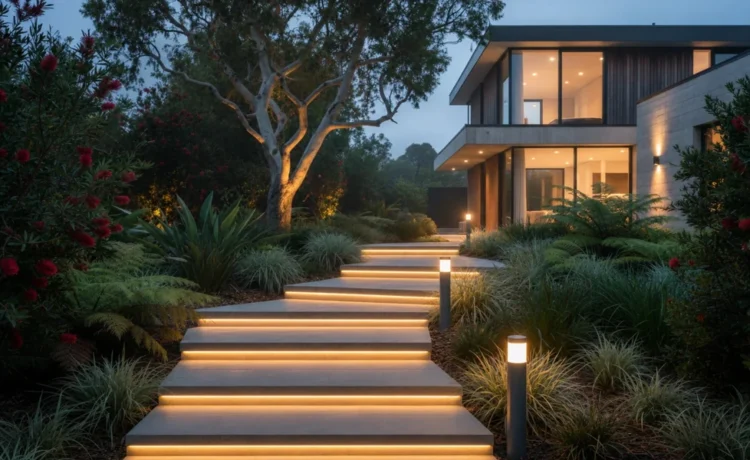
Security lighting along a long driveway should provide enough illumination to make the approach visible without creating excessive glare. Depending on the property’s layout, homeowners may benefit from a combination of strategically positioned pole lights, wall-mounted fixtures, motion-activated floodlights, and entrance lighting.
Rather than installing bright fixtures at random intervals, an electrician can evaluate the driveway’s length, width, elevation changes, surrounding vegetation, and existing electrical access.
For example, a driveway that curves around a wooded section may require lighting at several transition points. A straight gravel driveway might benefit from lighting near the road, at important turning areas, and closer to the garage or residence.
The goal is to create consistent visibility without unnecessarily illuminating every square foot of the property.
2. Illuminating Electric Gates, Pedestrian Entrances, and Driveway Turnarounds
Private gates are common on larger Dripping Springs properties. They provide privacy and controlled access, but they can become difficult to operate after dark when the entrance is poorly illuminated.
Lighting around an electric gate should help homeowners and visitors see the gate, keypad, access controls, and surrounding driveway. It should also provide enough visibility for drivers entering or leaving the property.
Several lighting options can improve these areas:
- Gate entrance lighting: Fixtures positioned near gateposts can illuminate the entrance and make it easier to identify approaching vehicles.
- Keypad lighting: Smaller fixtures can provide focused illumination around access panels, intercoms, and entry controls.
- Pedestrian entrance lighting: Dedicated lighting can make walk-through gates and nearby pathways easier to navigate.
- Driveway turnaround lighting: Floodlights or appropriately positioned area lights can illuminate spaces where vehicles reverse, turn around, or wait for the gate to open.
Homeowners should also consider how lighting interacts with automatic gate equipment. Electrical connections for lighting and gate operators may need separate planning, depending on the equipment, circuit requirements, and installation conditions.
An electrician can evaluate the existing electrical setup and determine whether additional wiring, circuit capacity, or properly protected connections are necessary.
Good lighting around the entrance also helps security cameras capture clearer images of vehicles and visitors, especially when the fixtures are positioned to avoid shining directly into camera lenses.
3. Adding Motion-Activated Floodlights Around Barns, Workshops, and Detached Garages
Acreage properties often have several structures located away from the main house. Detached garages, equipment sheds, barns, workshops, and storage buildings may contain expensive tools, vehicles, recreational equipment, lawn machinery, and other valuable belongings.
These structures can be particularly vulnerable when they sit outside the coverage of the home’s existing outdoor lighting.
Motion-activated floodlights are an effective option for these locations because they illuminate an area when movement is detected. Instead of leaving lights running throughout the night, homeowners can use motion sensors to activate fixtures when someone approaches a building or enters a designated area.
For example, a workshop might benefit from floodlights mounted near its main entrance and overhead garage door. A barn could require additional lighting near equipment storage areas, side entrances, and loading zones.
Detached garages may benefit from fixtures positioned to illuminate both the driveway and the building’s exterior walls.
When selecting motion-activated lighting, homeowners should consider several factors:
- Detection range and sensor adjustment options.
- The direction of the sensor and its field of view.
- Fixture brightness and beam angle.
- Mounting height and placement.
- Potential interference from moving tree branches, wildlife, or nearby road traffic.
- Whether the fixture can operate independently or integrate with a smart lighting system.
One common mistake is choosing a fixture based entirely on its advertised brightness. A powerful floodlight mounted in the wrong location may create harsh shadows, glare, or poorly illuminated areas immediately outside its beam.
Tejas Electric can help homeowners plan fixture placement around the actual structures and outdoor spaces that need protection.
4. Planning Electrical Connections for Structures Located Far From the Main House
One of the biggest differences between lighting a typical residential backyard and lighting a Dripping Springs acreage property is distance.
A detached workshop might be 75 feet from the house. A barn could be several hundred feet away. A private entrance or storage building may be located even farther from the main electrical service.
These distances matter because electrical installations must account for more than simply getting power to the desired location.
An electrician needs to evaluate the electrical load, conductor size, circuit requirements, voltage drop, installation conditions, and applicable electrical code requirements.
For example, adding one small LED security fixture to an existing outbuilding is different from installing several high-output floodlights, exterior receptacles, and additional equipment on the same structure.
If a remote building already has an electrical supply, it may be possible to use an existing circuit, provided it has sufficient capacity and is appropriately protected. In other situations, a new circuit or additional electrical infrastructure may be necessary.
Homeowners should avoid assuming that a nearby outdoor receptacle or existing extension cord can serve as a permanent power source for security lighting.
A properly designed installation should provide reliable power while protecting wiring and connections from weather, physical damage, and other outdoor conditions.
5. Evaluating Underground Wiring and Feeder Requirements for Remote Lighting Locations
Underground wiring is often part of the conversation when installing security lighting across a larger property.
Unlike homes with small yards, acreage properties may require electrical connections that travel underground between the main residence, detached garages, barns, gates, and other structures.
Underground electrical installations require careful planning. The appropriate wiring method, conductor size, burial depth, conduit requirements, and protection depend on the application and applicable electrical codes.
For example, a lighting circuit extending to a detached workshop may have different requirements than a feeder supplying an entire outbuilding with multiple electrical loads.
Voltage drop is another important consideration. When electrical conductors travel longer distances, voltage can decrease between the power source and the connected equipment. If the wiring is not properly sized for the load and distance, lighting performance and equipment operation can be affected.
An electrician can evaluate whether the existing electrical supply is adequate or whether a new feeder or separate circuit is needed.
Other considerations include:
- Identifying existing underground utilities before excavation.
- Selecting wiring and conduit approved for the installation conditions.
- Providing appropriate physical protection.
- Installing suitable outdoor electrical boxes and connections.
- Accounting for moisture exposure and drainage.
- Maintaining proper grounding and bonding.
- Using appropriate GFCI protection where required.
Before digging, homeowners and contractors should arrange for underground utility locating through Texas 811. Existing water lines, gas lines, communications cables, and electrical services can cross a property in unexpected places.
Proper underground planning is especially important in the Texas Hill Country, where rocky soil, uneven terrain, and long distances between structures can make electrical installations more involved.
6. Choosing Security Fixtures With the Right Brightness and Coverage
Not every outdoor area requires the same type of lighting. A small pedestrian gate has different illumination needs than a large equipment barn or a long driveway.
Choosing fixtures based on the property’s actual needs can improve visibility while avoiding unnecessary light pollution.
LED security lighting is a popular option because it offers efficient operation, long service life, and a wide range of fixture styles and brightness levels.
When comparing fixtures, homeowners should pay attention to lumens rather than relying only on wattage. Lumens measure the amount of visible light produced, while wattage measures electrical power consumption.
A few general considerations include:
Driveway lighting: Fixtures should provide enough coverage to illuminate the driving surface, curves, and entrance areas without creating distracting glare.
Gate lighting: More focused illumination may be appropriate around keypads, access controls, and pedestrian entrances.
Barn and workshop lighting: Wider beam patterns and higher-output fixtures may be necessary to illuminate large exterior walls and working areas.
Detached garage lighting: Fixtures should provide coverage near overhead doors, side entrances, and parking areas.
Patio and backyard security lighting: Motion-activated fixtures can provide additional visibility when someone approaches the home or enters an outdoor living area.
Color temperature is another consideration. Many homeowners prefer neutral or slightly warm white lighting around residential properties because it provides useful visibility without making outdoor spaces feel excessively harsh.
A professional lighting layout can help balance security, appearance, and practical nighttime use.
7. Installing Dusk-to-Dawn Lighting for Entrances and Frequently Used Areas
Motion-activated lighting is useful for areas that only need illumination when someone approaches. However, some locations benefit from consistent lighting throughout the evening and overnight hours.
Dusk-to-dawn fixtures use photocells to detect ambient light levels and automatically turn on when the sun sets. They switch off again when sufficient daylight returns.
This type of lighting can be particularly useful around:
- Main driveway entrances.
- Private gates and access points.
- Frequently used pedestrian entrances.
- Detached garage doors.
- Equipment storage areas.
- Exterior pathways connecting buildings.
- Frequently accessed barn entrances.
Homeowners who regularly arrive home after dark may appreciate having their driveway entrance illuminated without needing to activate a switch or trigger a motion sensor.
Dusk-to-dawn lighting can also be combined with motion-activated fixtures. For example, a property entrance might have a low-level light operating throughout the night, while brighter floodlights activate when movement is detected near a detached garage.
This combination can provide practical illumination while reducing the need to run high-output fixtures continuously.
8. Coordinating Security Lighting With Cameras and Property-Wide Security Systems
Security lighting becomes even more useful when it is planned alongside outdoor cameras and other security equipment.
Many Dripping Springs acreage homeowners use cameras to monitor gates, driveways, barns, workshops, and other areas that are not easily visible from the main residence.
However, camera performance can be affected by poor lighting. A camera positioned near a dark driveway may capture limited detail at night, making it harder to identify a vehicle, person, or other activity.
Adding appropriately positioned security lights can improve visibility and help cameras capture more useful nighttime footage.
There are several ways to coordinate these systems.
Lighting near driveway cameras: Illuminating the entrance can help cameras capture vehicles and visitors as they approach the property.
Motion-activated lighting near outbuildings: Floodlights can activate when movement is detected near workshops, garages, or storage buildings.
Lighting around gates: Dedicated fixtures can help cameras capture activity near access controls and pedestrian entrances.
Smart lighting integration: Certain security systems allow compatible lights to activate through an app, automation, or connected motion sensor.
It is important to remember that lighting and camera systems have different installation requirements. Outdoor electrical connections must be properly protected, and low-voltage camera wiring should be installed using methods appropriate for its application.
A professional electrician can help evaluate the electrical side of a coordinated security installation, including available power, outdoor connections, and dedicated circuits where needed.
9. Selecting Weather-Resistant Fixtures and Protected Electrical Connections
Outdoor lighting on acreage properties is exposed to more than darkness. Dripping Springs homeowners also have to consider Texas heat, intense sunlight, wind, heavy rain, humidity, dust, and occasional severe storms.
Fixtures installed near open fields, barns, and detached structures may experience even greater exposure than lights mounted beneath a covered residential porch.
Choosing weather-resistant fixtures is essential for long-term reliability.
Homeowners should look for fixtures rated for their intended outdoor location. Wet-location-rated fixtures are appropriate where equipment is exposed directly to rain and other weather conditions. Damp-location ratings are intended for protected areas that are not directly exposed to water.
Other important considerations include:
- Durable housing materials that can withstand outdoor exposure.
- Weather-resistant electrical boxes and covers.
- Properly rated conduit and fittings.
- Suitable seals and connections.
- Corrosion-resistant mounting hardware.
- Appropriate GFCI protection where required.
- Secure mounting that accounts for wind exposure.
Electrical connections should never be left exposed to moisture or installed using makeshift weatherproofing methods.
It is also worth considering the fixture’s operating temperature range. Outdoor equipment in Central Texas may experience prolonged exposure to high summer temperatures, so selecting products designed for the installation environment can help reduce premature failures.
Tejas Electric can help homeowners evaluate outdoor fixture options and make sure electrical connections are installed with durability and safety in mind.
10. Why Acreage Properties Need a Complete Lighting Plan Instead of Isolated Fixtures
One of the most common problems with outdoor security lighting is installing individual fixtures whenever a homeowner notices a dark area.
A floodlight gets added near the garage. Another light goes above the barn door. A motion sensor is installed near the back gate. Over time, the property ends up with several disconnected lighting solutions that may not work together.
While each fixture might improve visibility in its immediate area, the overall property can still have dark corridors, poorly illuminated entrances, and gaps between buildings.
A professionally planned lighting layout takes a different approach.
Instead of looking at each structure separately, an electrician evaluates how the different areas of the property connect.
For example, consider an acreage property with a private entrance, a winding driveway, a detached garage, a backyard patio, and a workshop located behind the residence.
A coordinated lighting plan might include:
- Dusk-to-dawn lighting at the main entrance.
- Additional fixtures at important driveway curves.
- Focused illumination around the electric gate and keypad.
- Motion-activated floodlights near the detached garage.
- Security lighting around the workshop and equipment storage area.
- Dedicated lighting near frequently used pedestrian pathways.
- Fixtures positioned to support outdoor camera coverage.
This type of approach can provide more consistent visibility and reduce the chance of leaving important areas unlit.
It also allows homeowners to consider future improvements. If a property owner plans to add another detached garage, equipment shed, outdoor kitchen, or workshop, electrical infrastructure may be easier to accommodate when those possibilities are considered during the initial planning process.
For larger properties, a complete lighting plan is often a more practical investment than repeatedly adding individual fixtures without considering the overall layout.
Can Dripping Springs Homeowners Install Their Own Security Lighting?
Homeowners who enjoy tackling weekend projects may wonder whether installing outdoor security lights is something they can handle themselves.
The answer depends on the type of installation.
Replacing an existing exterior light fixture with a compatible fixture, using an existing properly installed electrical box and wiring, may be a reasonable DIY project for someone with the necessary knowledge and experience. However, homeowners should always follow the manufacturer’s instructions, turn off the appropriate circuit, verify that power is off, and comply with applicable electrical requirements.
More extensive installations are a different matter.
Running new electrical wiring across a property, installing underground circuits, adding feeders to detached structures, connecting gate lighting, modifying electrical panels, and installing multiple outdoor fixtures can involve significant electrical and safety considerations.
Incorrect installations can create shock hazards, fire risks, damaged equipment, and expensive repairs.
Texas also has licensing requirements governing electrical work. Homeowners should not assume that being handy or having experience with basic home repairs qualifies someone to perform electrical work that requires a licensed professional.
For more involved projects, hiring a qualified Texas-licensed electrician is the safer and more reliable approach. An experienced electrician can evaluate the existing electrical system, determine appropriate wiring methods, calculate loads and voltage drop, and ensure the installation meets applicable code requirements.
For acreage properties in particular, professional installation is worth considering because the electrical work may involve long underground runs, detached buildings, outdoor panels, and multiple lighting zones.
Professional Security Light Installation for Dripping Springs Acreage Homes
Outdoor security lighting should make a property safer and more convenient without becoming another maintenance headache. For Dripping Springs homeowners, that means looking beyond the house itself and considering the entire property, from the entrance gate and driveway to detached garages, workshops, barns, and backyard gathering areas.
A thoughtfully designed system can improve nighttime visibility, help discourage unwanted activity, support outdoor camera coverage, and make it easier to move around the property after sunset.
Tejas Electric provides professional electrical services for homeowners in Dripping Springs and surrounding Hill Country communities. Whether a property needs new exterior floodlights, improved driveway illumination, lighting around a detached workshop, or electrical connections for remote outdoor fixtures, having the work properly evaluated and installed can make a meaningful difference.
As a family-owned electrical contractor, Tejas Electric understands that every property has different requirements. A compact residential lot and a multi-acre Hill Country property should not necessarily receive the same outdoor lighting solution.
The right approach starts with understanding how the property is used, identifying areas where additional visibility is needed, and selecting fixtures and electrical connections suited to the environment.
For homeowners considering a security lighting upgrade, a professional evaluation can help identify practical improvements and avoid common installation mistakes.
With the right combination of strategically placed fixtures, reliable electrical infrastructure, and weather-resistant equipment, Dripping Springs acreage homeowners can enjoy better visibility and greater peace of mind throughout their property, long after the sun goes down.
What Happens During a Home Electrical Panel Upgrade?

Few home projects make people as nervous as a panel upgrade. The power goes off, a crew takes the cover...

Understanding Hardwood Flooring Grades and Finishes for a Lasting Interior Appeal

Glossy, rich, and warm underfoot, hardwood flooring can take a room from generic to breathtaking. But the secret to this...

How to Plan a Stress-Free Move: A Practical Guide to Packing, Budgeting, and Choosing Reliable Help

Moving ranks among life's most stressful events. Even a short local move involves dozens of small decisions, from what to...
Desert Heat Hits Home Wiring Three Ways


By October in the East Valley, the air conditioner finally gets real breaks between cycles and most homeowners let out...