





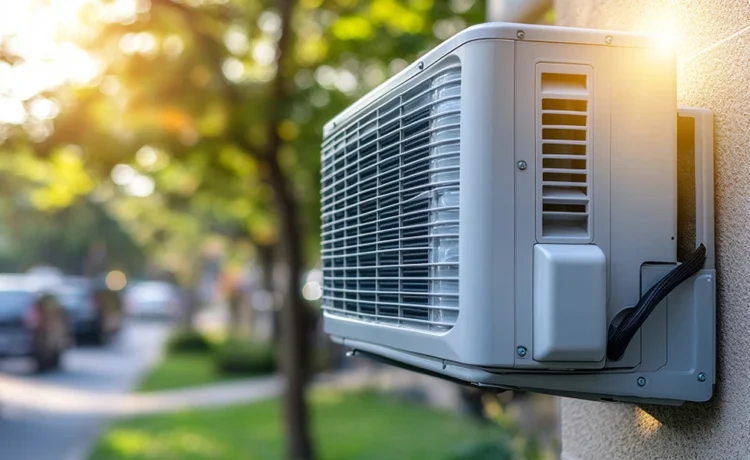
Where an outdoor unit ends up sitting gets decided once, during installation, and then lived with for the system’s entire working life. Unlike a filter that gets cleaned or a coil that gets serviced, the unit’s physical position-how far it sits from the indoor unit, how exposed it is to direct sun, how much clearance surrounds it-is essentially locked in from day one, quietly shaping efficiency and wear for as long as the system runs.
Almost every other maintenance decision can be revisited later. This one, in practice, almost never gets revisited once the bracket is bolted in and the pipework is run.
Why Pipe Run Length Affects Everything After Installation
The refrigerant pipe connecting the indoor and outdoor units has to carry refrigerant across whatever distance separates them, and every additional metre of that run adds a small amount of resistance the system has to work against continuously. A longer run isn’t necessarily a problem on its own, but it does mean the system operates under a slightly heavier load for its entire lifespan compared to a more efficiently routed installation, a difference that compounds quietly over years of continuous operation rather than showing up as an obvious fault.
None of this shows up as a dramatic failure; it shows up gradually, as a slightly higher electricity bill and a slightly shorter compressor lifespan than the same system would have had under a shorter, better-routed run.
Why This Decision Deserves Real Thought at the Planning Stage
Treating outdoor unit placement as a minor logistical detail, rather than a decision with genuine long-term consequences, tends to produce a system that technically works but never operates quite as efficiently as it could have. Anyone installing a new aircon system benefits from treating placement as seriously as the unit selection itself, since a poorly positioned outdoor unit can undercut even a genuinely well-chosen system’s actual performance.
Placement Factors That Matter More Than People Expect
A handful of positioning details tend to have outsized, lasting effects on how a system actually performs:
- Distance from the indoor unit, since a longer refrigerant pipe run adds ongoing resistance the system has to work against.
- Direct sun exposure, which raises the outdoor unit’s operating temperature and can reduce cooling efficiency.
- Airflow clearance around the unit, since restricted airflow causes hot exhaust air to recirculate back into the intake.
- Proximity to walls or enclosed spaces, which can trap heat and further reduce the unit’s ability to dissipate it effectively.
Why Experience in Reading a Specific Site Actually Matters Here
Balancing all of these factors against a property’s actual physical constraints, available wall space, existing structures, and practical access takes genuine site-specific judgement rather than a generic default placement applied regardless of the property. This is exactly the kind of practical experience the Newway installation team brings to a new installation, weighing these trade-offs directly against a specific property’s layout rather than defaulting to whatever position happens to be most convenient to install.
Why This Rarely Gets Discussed Before Installation Day
Most pre-installation conversations understandably focus on the unit itself, capacity, brand, features, price, rather than the specific spot the outdoor component will occupy for years afterwards. Placement often gets decided somewhat reactively on the day, based on whatever location seems most straightforward to work with, rather than through a deliberate conversation about the trade-offs involved beforehand.
Raising it as an explicit question beforehand, rather than leaving it to be settled on the day itself, tends to produce a noticeably better outcome for very little extra effort.
A system’s efficiency and longevity depend on more than which model gets chosen; they depend just as much on where its outdoor half actually ends up sitting, a decision made once and then lived with for the system’s entire working life. Raising this question explicitly before installation day tends to produce a considerably better long-term result than leaving it to whatever position seems easiest in the moment.
A few extra minutes spent thinking through placement upfront is a small cost against years of quietly compounding efficiency, paid either way whether anyone actually chooses to think about it or not.
Planning a new installation and want placement done right from the start? Contact Newway Air Conditioning to discuss your specific site.
Sourcing Factory-Direct Luxury Finishes via Design and Build in Singapore Partners

IntroductionBuilding a luxury residence in Singapore requires more than just an aesthetic vision. It demands a sophisticated approach to material...

Cabinet Refinishing: Know What the Existing Finish Can Handle

When your kitchen cabinets are worn, the whole room feels old. Sometimes your cabinets are in fine shape, but they...

Porcelain Tub Repair in Portland OR Can Be Smarter Than Replacement


Porcelain tub repair Portland oR: is repairing better than Replacing a Bathtub? A dirty tub can make an entire bathroom...

What Happens to Pest Activity After a Tulsa Storm
A storm can change what is happening around a home long after the rain stops. Water collects where the ground...